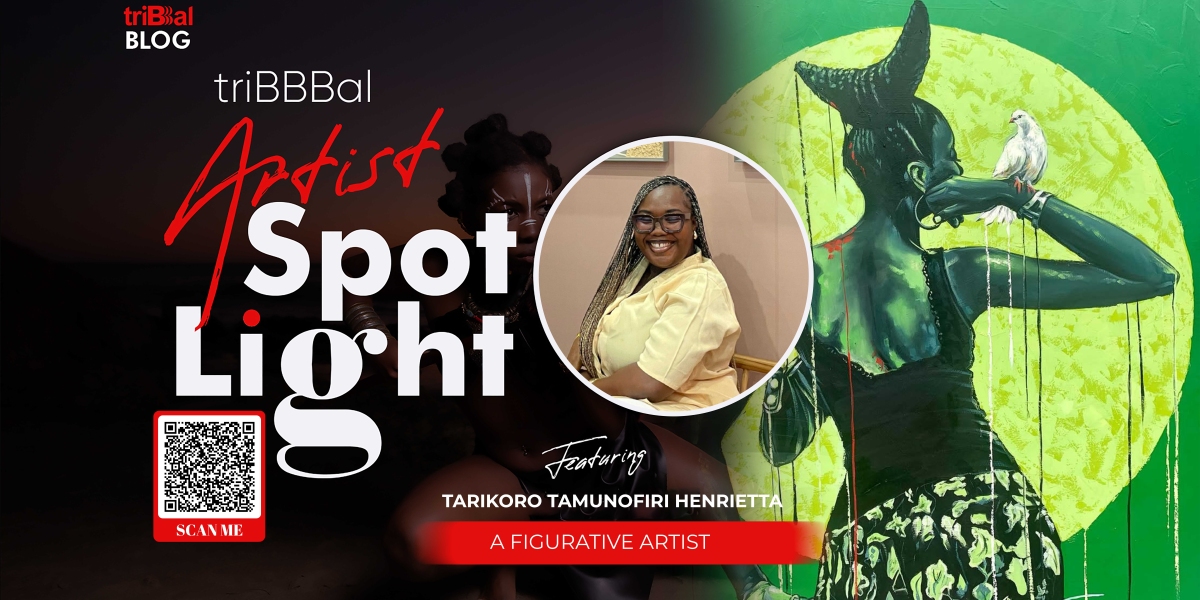
Introduction
In a world often characterized by noise and rapid movement, the art of Tarikoro offers a profound invitation to pause. As an emerging artist whose journey began in textile design before evolving into a powerful painting practice, Tarikoro’s work is a deliberate sanctuary of stillness and introspection. Her canvases are not merely visual representations but acts of healing and resilience, born from personal experience with emotional distress. As she notes, she realized art was more than a hobby during a period of anxiety, finding that creating brought her "calm and clarity". By focusing on quiet emotion, intuitive color palettes, and the celebration of Black identity and African heritage, Tarikoro crafts visual narratives that resonate with a deep sense of calm strength, positioning her as a vital new voice in contemporary art.
Artists Bio:
Tarikoro Tamunofiri Henrietta is a Nigerian visual artist, born and raised in Nigeria. Her passion for art began at a very young age, when drawing and painting became her natural way of expressing the world around her. Over time, this passion deepened into a calling, leading her to pursue it professionally and earn a degree in Fine and Industrial Arts from the University of Uyo, Akwa Ibom State.
Henrietta’s practice is deeply personal, rooted in emotions, memories, and lived experiences, as well as the imagined realities of others. She never fails to add a touch of nature when describing or reflecting on her work, believing that nature holds profound metaphors for human life and healing. Each piece becomes a space for reflection, vulnerability, and connection, inviting viewers to see fragments of themselves mirrored in her art.
For Henrietta, art is both expression and healing a lifelong journey of translating introspection into visual form, where every piece becomes a bridge between feeling and meaning, silence and storytelling, pain and hope.

Q and A Segment with Tarikoro
Q1. How did you first become interested in art, and how did your formal education shape your approach to painting?
Ans: My first interest in art began with textile and fashion design. I practiced textile design for a few years, creating patterns, tie-and-dye works, prints, and sewing my own pieces. This deep interest in art and fashion was what motivated me to pursue a degree in Fine Arts.
During my second year at university, I became drawn to painting after spending time in an art studio where I observed painters at work. Watching how simple tools like brushes and paint could bring faces and landscapes to life sparked my curiosity. I began sketching, experimenting with color, and translating my imagination onto canvas. Over time, I progressed from imaginary works to using references, and my early love for landscapes and nature continues to influence my paintings today.
Q2. When did you realize art was not just a passion but a necessary form of expression and healing for you?
Ans: I realized art was more than a hobby during a period of emotional distress. I was overwhelmed and anxious, and while looking at a photograph of a friend, I found myself emotionally stepping into the image. That moment inspired my monochrome series Out of Space, a reflection of feeling disconnected yet searching for peace.
Creating that work brought me calm and clarity. It showed me that art is not just about aesthetics but a powerful tool for healing, resilience, and emotional expression.
Q3. Walk us through the creation of a typical painting. Do you work from photographs, live models, or imagination?
Ans: Every painting begins with a story. Once the narrative and mood are clear, I work with real models and explain the story to them so they can emotionally inhabit the moment. I photograph the session, edit the images, and create a final reference that reflects the feeling I want to convey.
While colors are important, my main focus is always the story, the figure, and symbolic elements such as flowers or nature. Emotion guides my entire process.
 Title: Petals of Hope
Click here to buy:
https://tribbbal.com/post/125439_petals-of-hope.html
Q4. What is your philosophy on using color and texture to communicate emotion and meaning?
Ans: I approach color intuitively rather than symbolically. I am drawn to bright skies and simple, calm palettes that support the story rather than overpower it. My process is intentionally minimal and I avoid chaos and complexity.
Texture is subtle and soft, allowing emotion to exist quietly on the canvas. Warm or cool tones are chosen based on the mood I want to communicate, always to serve the narrative.
Q5. What role does quiet reflection and stillness play in your work?
Ans: Stillness plays a central role in my art because it was through quiet reflection that I found healing myself. My paintings invite viewers to pause, breathe, and emotionally connect with the moment being portrayed.
In a loud and fast-paced world, my work creates space for calm, hope, and peace. I see my art as a form of visual therapy. It is art for healing and emotional rest.
Q6. How do you capture vulnerability and quiet emotion in your subjects?
Ans: I work primarily with real people and original references. By sharing the story behind each painting, I encourage my models to emotionally live in the moment rather than perform for the camera. This allows vulnerability to emerge naturally.
Many of my works feature female figures and traditional hairstyles like Bantu knots, reflecting my identity as a woman and my appreciation for African culture. These elements allow me to express personal narratives while celebrating heritage.
Q7. Can you discuss the intention behind your work “Blackpride” and how it explores Black identity and resilience?
Ans:
Blackpride was created as a meditation on stillness and self-awareness. It captures a quiet moment of introspection - a lone figure standing in nature, pausing to reflect without noise or chaos. This calm setting is intentional, as it allows the viewer to focus on presence, inner strength, and the grounding relationship between the figure and the natural world.
Through this work, I aim to celebrate Black identity in its fullness - our beauty, skin, hair, and cultural heritage without spectacle or distortion. The piece challenges the idea that resilience must always be loud or dramatic. Instead, Blackpride speaks to a quieter, deeply rooted resilience: one that exists in reflection, in connection to ancestry and land, and in the simple act of being. This subtle strength is central to how I understand and express Black identity through my art.

Title: Blackpride
Click here to buy:
https://tribbbal.com/post/125442_black-pride.html
Q8. How has the digital age and global online galleries changed how you connect with collectors?
Ans: This is my second year actively building a professional body of work and artistic identity. The digital space has helped my art reach audiences beyond my immediate environment.
Being approached by platforms like triBBBal has been encouraging, as it affirms that my work and stories are being seen and valued globally. While I am still emerging, these platforms have expanded my visibility and confidence as an artist.
Q9. What are the biggest challenges facing emerging African artists today, and what advice would you give?
Ans: Many emerging artists struggle with defining their style, building strong portfolios. Art goes beyond visual beauty, yet many artists struggle with developing strong literature to support their paintings. Reading, studying, and critical thinking are important parts of an artist’s growth.
My advice is to ask questions, seek mentorship, and connect with fellow artists. Community is important. Financial pressure is also a reality, but growth takes time. Stay patient, keep creating, and remember that building a lasting artistic identity is just as important as selling work.
Q10. What technical direction do you hope to explore next?
Ans: I am currently interested in exploring mixed media, particularly using soft materials such as fabric and paper to build texture and depth. I am also drawn to working on larger canvases.
While my themes will continue to focus on nature, hope, stillness, and resilience, I am interested in expressing these ideas through new materials and expanded scale rather than heavier emotional narratives.
While my practice is rooted in introspection, healing, and stillness, culture plays an equally important role in my visual language. As a Black artist, I am deeply drawn to African heritage not as a fixed tradition, but as a living presence expressed through fabric, hairstyles, skin tones, jewelry, and symbols of everyday life.
My painting roots in Cloth reflects this interest, exploring how African textiles carry memory, identity, and quiet strength, allowing individuals to stand out while remaining connected to their roots. I am interested in exploring African culture beyond national boundaries, engaging with Africa as a continent rich in diversity, shared histories, and visual storytelling. Through this, I aim to celebrate Black identity with tenderness, pride, and calm resilience.

Title: Blackpride
Click here to buy:
https://tribbbal.com/post/125441_the-ninebark.html
Conclusion
Tarikoro Tamunofiri Henrietta's work stands as a powerful testament to the quiet strength found in introspection and cultural pride. By focusing on themes of stillness, hope, and resilience, she offers a form of visual therapy in a loud and fast-paced world. Her process, which prioritizes the story and the emotional state of her subjects over complex visual chaos, results in paintings that are both deeply personal and universally inviting. As she looks to the future, Henrietta plans to expand her technical direction by exploring mixed media, particularly soft materials like fabric and paper, and working on larger canvases. Her commitment remains fixed on celebrating Black identity and the rich diversity of African heritage, ensuring that her art continues to serve as a deeply rooted expression of personal narrative and calm, enduring resilience.
To learn more about Tarikoro Tamunofiri Henrietta, please visit her profile: